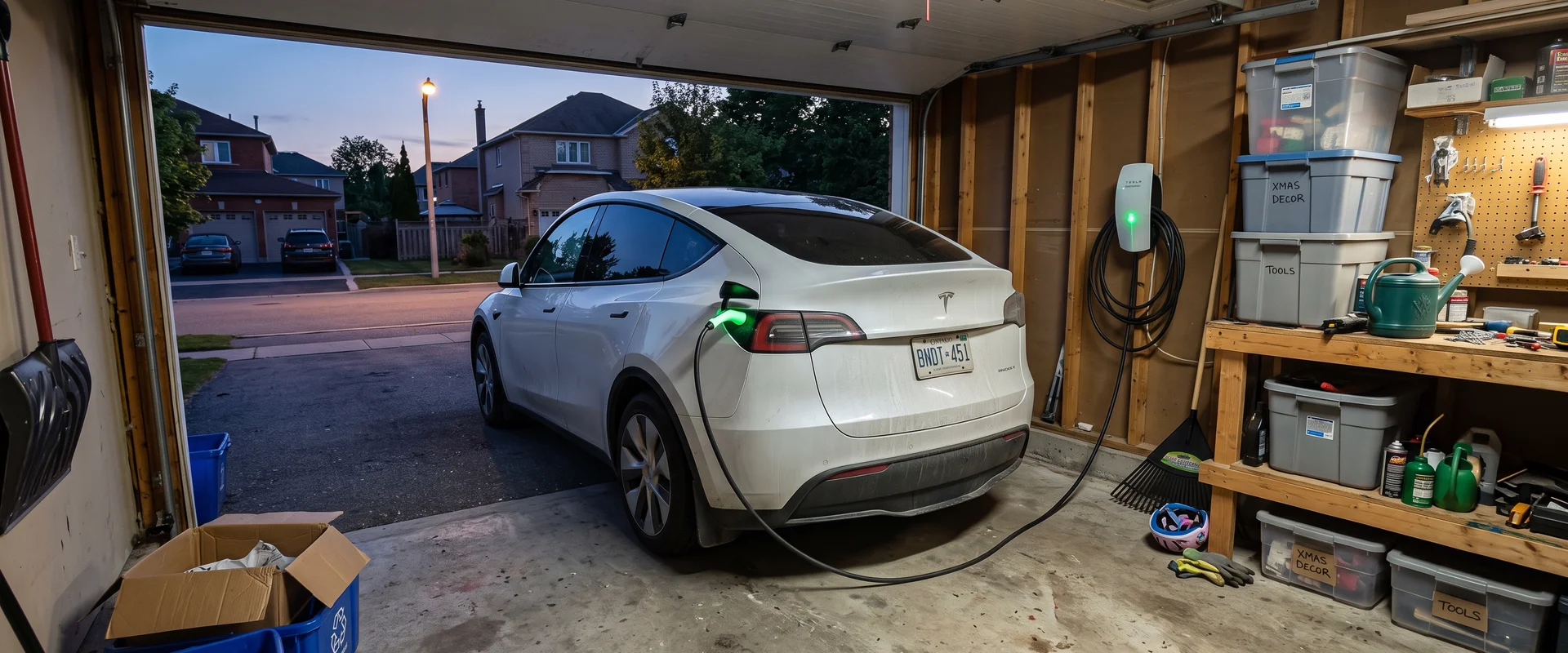
What is a subpanel, and when do you need one?
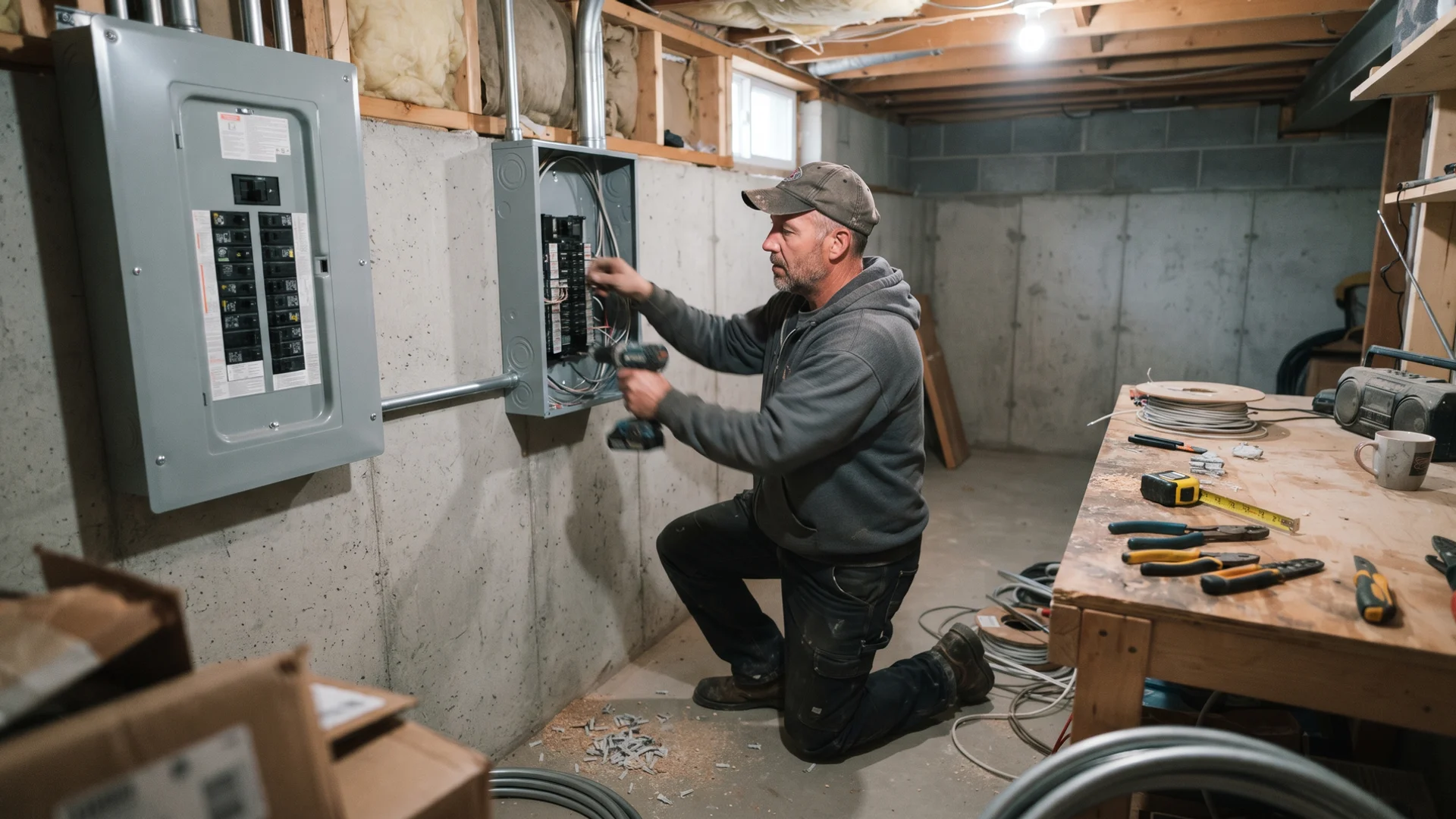
If your main panel has spare service capacity but no breaker space, a dedicated subpanel is often the right, lower-cost fix. Our crew sizes the feeder, runs a load calculation, and installs the subpanel so your EV circuit has a clean home without a full panel upgrade. We file the ESA permit and schedule the inspection so everything is compliant.
A subpanel is a smaller distribution panel fed from your main panel by a single dedicated feeder. It provides new breaker spaces without touching your service size, your meter, or the utility. For a home that simply ran out of slots after years of added circuits, that is exactly the problem to solve.
The confusion that costs people money is treating “full panel” and “not enough service” as the same thing. They are not, and only a load calculation tells them apart.
Breaker space or service capacity?
This is the entire decision, and it is worth understanding before anyone quotes you.
Service capacity is how many amps your home can draw in total, set by your service size, meter, and main breaker. Typically 100A or 200A in the GTA. Breaker space is how many physical slots the panel has left. They are completely independent, and a panel can be physically full while the service still has substantial headroom.
If the load calculation shows spare capacity and the only obstacle is slots, a subpanel at $1,500 to $2,800 CAD gives you the EV circuit and room for the next few projects. If the calculation shows the service itself is near its limit, a subpanel does not help, and the honest answers are an EV load management device at $500 to $1,200 CAD or a 200A electrical panel upgrade at $2,500 to $4,500 CAD.
We run the OESC Section 8 calculation before quoting so that decision is made on numbers rather than on how crowded the panel door looks.
Common problems we solve
- Full panel, quoted a full upgrade when a subpanel was the correct and cheaper fix.
- Tandem and double-stuffed breakers used to squeeze in circuits, often beyond what the panel is listed for.
- Detached garages with no power at all, or with a single lighting circuit borrowed from the house.
- Failed inspections from subpanels wired with bonded neutrals, a classic and easily avoided error.
- Workshops and basement suites that need their own distribution alongside the EV circuit.
What does the install involve?
The subpanel is mounted, usually beside the main panel or at the load it serves. A feeder runs between them, sized from the load calculation with voltage drop checked on longer runs, protected by an appropriately rated breaker in the main panel.
Inside the subpanel, the neutral bar is isolated and the ground is separately bonded. That detail is not optional and it is the first thing an ESA inspector looks for. Your EV charger circuit is then landed on a double pole breaker, and the circuit directory is labelled properly inside the door.
For a detached garage, the same logic applies with a buried feeder in conduit, proper depth and backfill, and outdoor-rated terminations at both ends. We measure the run and price the trenching during the site inspection so nothing shifts on the day.
Then the ESA inspection, the Certificate of Acceptance, and a live charge session to confirm the circuit performs under real load.
What does it cost across the GTA?
A subpanel beside the main panel runs $1,500 to $1,900 CAD. A remote subpanel with a feeder run across the house runs $1,900 to $2,800 CAD. A detached garage subpanel with buried feeder and trenching runs $2,800 to $4,200 CAD depending on distance and ground conditions.
All of those include the load calculation, the ESA permit, the inspection, and the Certificate of Acceptance. None of them require utility scheduling, which is why a subpanel job typically completes in a single day rather than the 1 to 2 weeks a full 200A service upgrade takes.
We size the subpanel with spare spaces on purpose. A second charger, a heat pump circuit, or workshop power later should be a breaker, not another project.