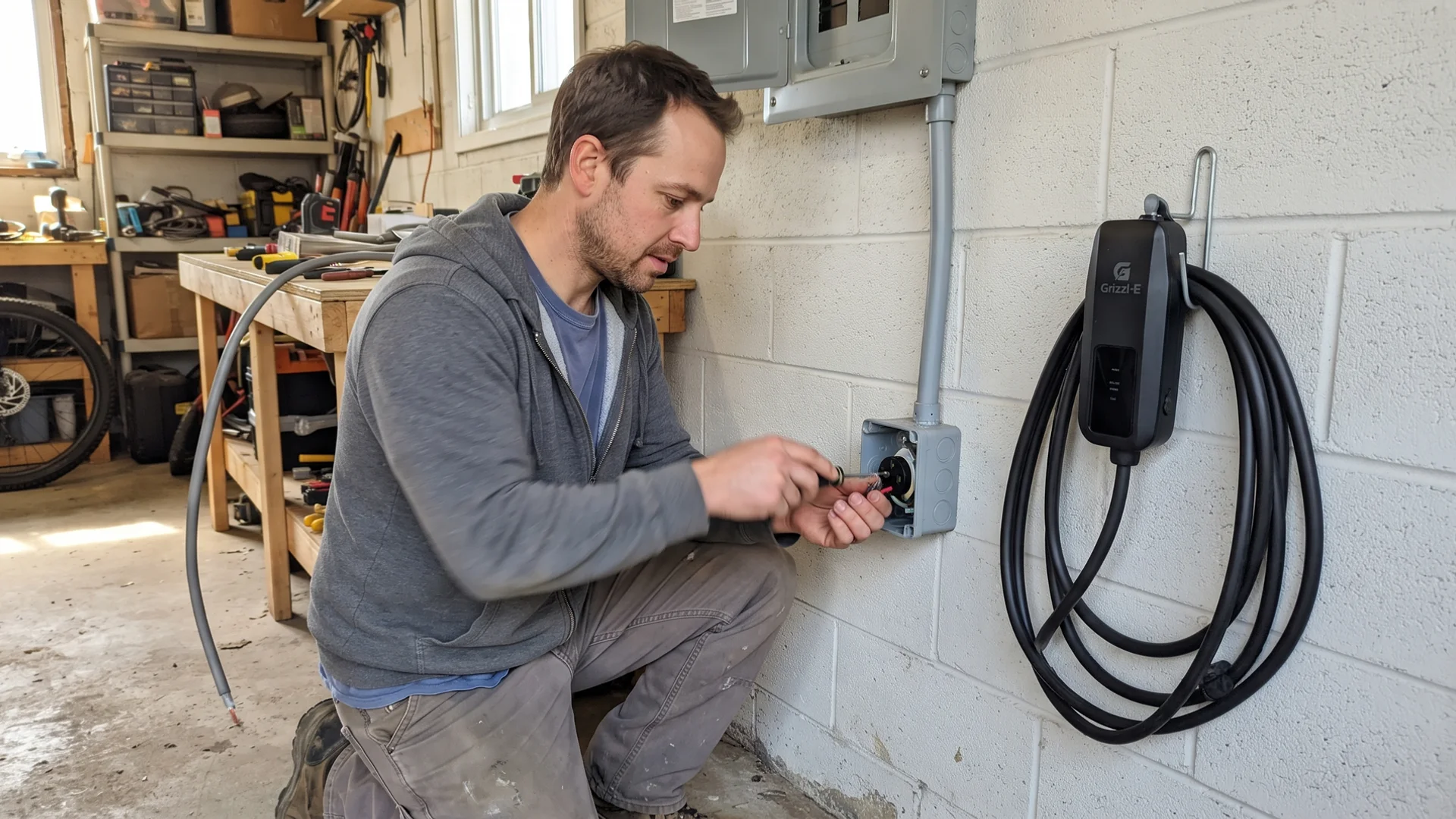
Electrician installing a NEMA 14-50 receptacle on a Toronto garage wall

Renter Friendly

Hardwired 240V Outlet (NEMA 14-50) Installation in Toronto and the GTA

Dedicated NEMA 14-50 or NEMA 6-50 240V outlet installation for portable EV charger use, popular with renters and households who plan to move.

$800 to $1,500 CAD

Same-day quote, next-day install

  • ESA/ECRA Licensed
  • Master Electrician on Staff
  • $2M Liability
  • WSIB Insured

Rating

4.9 / 5 (150+ Google reviews)

Licensing

ESA/ECRA Licensed

Response

Same-day quote, next-day install

Completed

1,200+ installs

What is a dedicated 240V EV outlet?

A dedicated 240V receptacle lets you run a portable EV charger and take it with you if you move, which makes it a favourite for renters. We install NEMA 14-50 and NEMA 6-50 outlets on a dedicated circuit with the GFCI protection the OESC requires, and file the ESA permit and inspection. If nuisance tripping is a concern, we will walk you through the hardwired alternative.

The circuit itself is straightforward electrical work done properly: a double pole GFCI breaker, 8-gauge copper conductors on a 50A circuit, and a receptacle in a proper box with an in-use cover where it is exposed. What varies is the run. A receptacle on the other side of the panel wall is a quick job. A run across a finished garage, or out to a detached one, is where the cost and the planning live.

Most portable chargers ship with a 14-50 plug and draw 32A continuous. That is roughly 30 kilometres of range per hour, which fills any commuter battery overnight without effort.

Should you choose plug-in or hardwired?

This is the honest trade-off, and it comes down to how long you plan to stay.

Choose the outlet if you rent, if you expect to move within a few years, or if you want the flexibility to unplug the charger and take it on a trip. The portable unit goes in the boot, and the next occupant inherits a useful receptacle rather than an orphaned charger.

Choose hardwired if you own and plan to stay. A hardwired unit on a 60A circuit delivers 48A continuous against the 32A a portable typically manages, it eliminates the plug as a wear point, and it removes the GFCI stacking that causes nuisance tripping on some charger and breaker combinations.

We will tell you which one your situation points to. A lot of customers call asking for the outlet and leave with a hardwired Tesla Wall Connector or Grizzl-E, and a lot of others do the opposite. Both are correct answers to different questions.

Common problems we solve

  • Repeated GFCI trips. Usually a portable charger’s internal protection stacking with the breaker, or moisture in an outdoor receptacle.
  • Undersized existing dryer or range circuits. Tempting to reuse, not code-compliant for a continuous EV load.
  • Overheating plugs. Cheap receptacles under continuous 32A load are a known failure mode. We install industrial-grade ones.
  • Detached garage runs. Buried feeder, conduit, and often a small subpanel, all priced before we dig.
  • Unpermitted DIY work. We can inspect, correct, and permit existing installs so your insurance stands up.

What does the install day look like?

We confirm the receptacle type first, since 14-50 and 6-50 are not interchangeable and your charger’s plug decides it. Then the double pole GFCI breaker goes into the panel, conduit runs to the mounting point, and 8-gauge copper conductors are landed on an industrial-grade receptacle. On longer runs we check voltage drop and upsize the conductors where the numbers call for it.

Exposed and outdoor locations get a weatherproof in-use cover and sealed penetrations. We set the height so the charger cable is not resting in snow through a Toronto winter, and add a wall hook so the cable has somewhere to live.

Before we leave, we verify voltage and polarity under load with the charger actually running, then book the ESA inspection. The Certificate of Acceptance comes to you once it passes.

What does it cost in Toronto and the GTA?

A dedicated 240V receptacle install runs $800 to $1,500 CAD. Short runs from a nearby panel sit near the bottom. Runs across a finished garage, outdoor mounting, or an in-use weatherproof enclosure push toward the top.

Detached garages are their own scope at $1,500 to $2,800 CAD, because they need a buried feeder, conduit, trenching, and usually a small subpanel. We measure and price that during the site inspection so nothing moves on install day.

If your panel has no room for a 50A circuit, add either an EV load management device at $500 to $1,200 CAD or an electrical panel upgrade at $2,500 to $4,500 CAD. The OESC Section 8 load calculation tells us which, and we quote the cheaper compliant option first.
Transparent Pricing

How much does 240v outlet cost in Toronto?

$800 to $1,500 CAD (CAD). You get a fixed written quote with the ESA permit fee itemized before any work begins.

Short Run

$800 to $1,050

  • Receptacle within 6 metres of the panel
  • 8-gauge copper on a 50A circuit
  • GFCI protection to OESC
  • ESA permit and inspection
Get Your Free Quote
Most Common

Standard Garage Run

$1,050 to $1,500

  • Longer conduit run across the garage
  • Weatherproof or in-use cover
  • Cable hook and mounting
  • Rebate eligibility check
Get Your Free Quote

Detached Garage or Outdoor

$1,500 to $2,800

  • Buried feeder and conduit
  • Small subpanel where needed
  • Trenching and backfill included
  • Outdoor-rated enclosure
Get Your Free Quote

Range covers the receptacle, the dedicated 240V circuit, an OESC-compliant GFCI breaker, the ESA permit, and inspection. Long conduit runs and detached garage feeders are quoted separately. Panel work, where required, is additional.

Why Us

Why choose us for 240v outlet?

Straight advice on plug-in vs hardwired

The outlet is the right call for renters and movers. If you are staying put, we will tell you the hardwired unit charges faster.

GFCI done to current OESC

Receptacle-fed EV circuits require GFCI protection. We install it correctly rather than skipping it and hoping.

Nuisance tripping addressed

Plug-in setups can trip on some charger and breaker combinations. We know which pairings misbehave and plan around them.

Proper conductor sizing

8-gauge copper on a 50A circuit, sized for continuous load with voltage drop checked on long runs.

Weatherproofing that lasts

Outdoor and exposed installs get in-use covers and sealed penetrations built for Ontario winters.

ESA permit included

Filed, inspected, and documented. A receptacle install is permitted work, whatever the internet tells you.

Process

How does 240v outlet work?

Four clear steps, with the ESA permit and inspection built into every one of them.

01

Confirm the Right Receptacle

14-50 or 6-50 depends on your charger and whether a neutral is needed. We settle it on the call.

02

Route and Load Check

We confirm the panel can carry a 50A circuit and plan the conduit route to where you actually park.

03

Install the Circuit

GFCI double pole breaker, 8-gauge copper, receptacle in a proper box with an in-use cover where exposed.

04

Test and Inspect

Voltage and polarity verified under load, ESA inspection booked, Certificate of Acceptance handed to you.

Comparison

How Best EV Charger Toronto compares

Feature Typical provider Best EV Charger Toronto
GFCI protection Sometimes skipped Installed to current OESC requirements
Conductor sizing Minimum that passes Sized for continuous load with voltage drop checked
ESA permit Treated as optional on receptacles Filed and inspected every time
Advice on alternatives Sells what you asked for Tells you when hardwired is the better buy
Outdoor rating Standard cover In-use cover and sealed penetration

Our Work

Recent 240v outlet jobs

Click any photo to enlarge.

Need 240v outlet in the GTA?

Send us your address and vehicle. We call back within 2 hours with a price range and a next available install date.

Reviews

What customers say about our 240v outlet

4.9 out of 5 across 150+ Google reviews from Toronto and GTA homeowners.

"NEMA 14-50 install for my portable charger. Same-day quote, done the next morning."

Sam O.

Millcroft, Burlington

"Clean hardwired install on the garage wall, tidy conduit, and the ESA inspection passed first time."

Tom C.

Guildwood, Scarborough

"Detached garage feeder plus subpanel. Priced upfront and it did not move."

Chris B.

Woodbine Heights, East York

FAQ

240V Outlet questions, answered

How much does a NEMA 14-50 outlet cost in Toronto?

A dedicated 240V receptacle install runs $800 to $1,500 CAD, covering the circuit, an OESC-compliant GFCI breaker, the receptacle, the ESA permit, and inspection. Detached garage runs with trenching are quoted separately at $1,500 to $2,800 CAD.

What is the difference between NEMA 14-50 and NEMA 6-50?

A 14-50 has four conductors including a neutral, and it is the common RV and EV receptacle. A 6-50 is three conductors with no neutral, often used for welders. Most portable EV chargers ship with a 14-50 plug, so that is what we install unless your equipment says otherwise.

Is a plug-in outlet slower than a hardwired charger?

Usually yes. A portable charger on a 14-50 is typically limited to 32A, while a hardwired unit on a 60A circuit delivers 48A. In practice both fill a battery overnight, so the difference matters most if you drive long distances daily or top up in short windows.

Why does my EV charger trip the GFCI breaker?

Some portable chargers have their own ground fault protection, and stacking it with a GFCI breaker can cause nuisance trips. Moisture in an outdoor receptacle does it too. We select breaker and receptacle combinations known to behave, and where trips persist the hardwired route removes the conflict entirely.

Can I install the outlet myself?

No. A 240V circuit is permitted electrical work in Ontario and must be installed by a licensed Electrical Contractor with an ESA permit and inspection. Unpermitted work creates real insurance problems, and it disqualifies you from the Home Renovation Savings rebate.

Does a NEMA 14-50 outlet qualify for the Ontario rebate?

The Home Renovation Savings program is built around an ENERGY STAR certified Level 2 charger with an ESA permit. A receptacle alone may not qualify on its own, but paired with an eligible charger it often does. We check your specific combination before you buy anything.

Can you install the outlet in a detached garage?

Yes. That needs a buried feeder in conduit and usually a small subpanel in the garage. We measure the run, size the conductors for voltage drop, and price the trenching upfront so the quote holds on install day.

Is the outlet safe to leave outdoors in winter?

Yes, when it is installed properly. Outdoor receptacles get a weatherproof in-use cover, sealed penetrations, and mounting height that keeps them clear of snow. We would still recommend storing the portable charger indoors between uses.

Still have a question about your panel or your charger?

Ask Our Crew
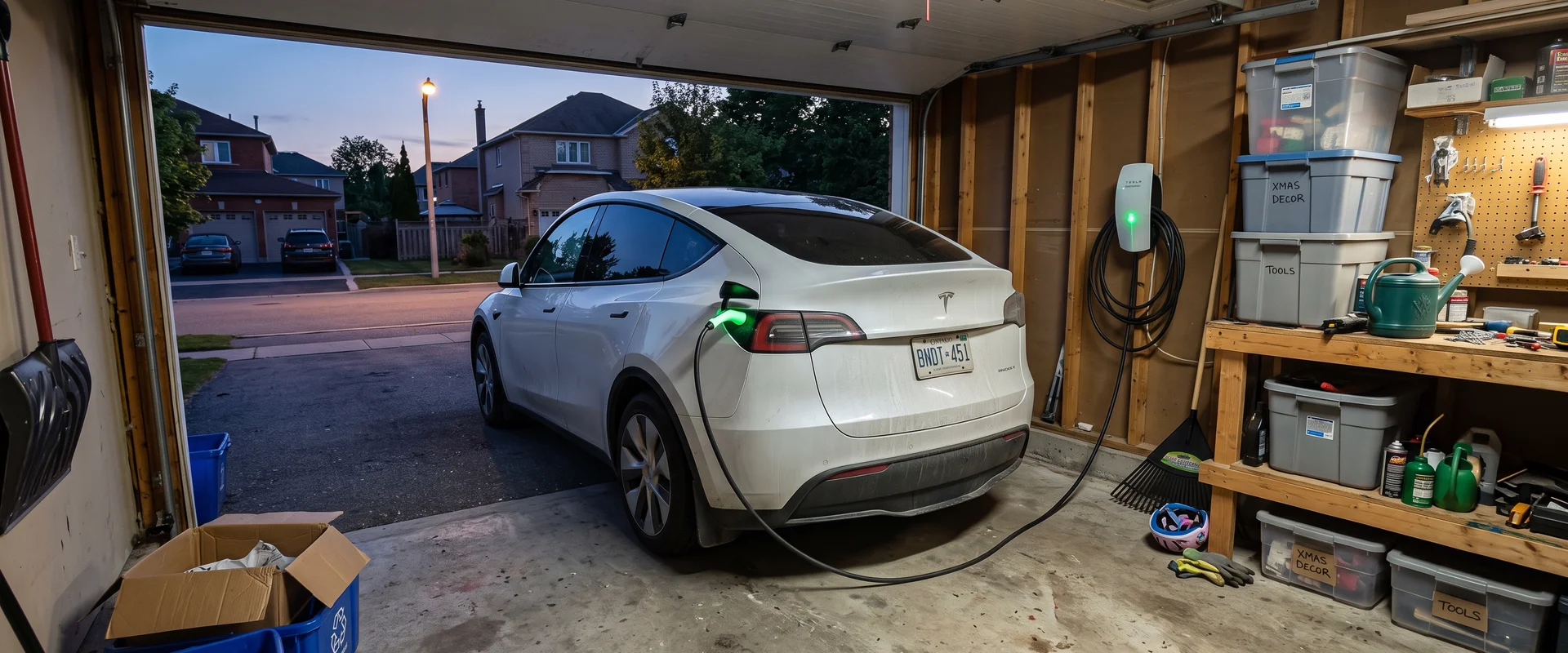
Electric vehicle charging from a wall-mounted Level 2 charger in a Toronto garage

2026 Ontario EV Rebate: up to $5,000 for eligible installations

Book your 240v outlet today

Dedicated NEMA 14-50 or NEMA 6-50 240V outlet installation for portable EV charger use, popular with renters and households who plan to move. Fixed written quote, ESA permit included, rebates filed on your behalf.

  • ESA permit and inspection included
  • Fixed written pricing, no hidden fees
  • Rebates filed on your behalf
Call Now Free Quote