What rebates apply to an EV charger in Ontario?
The 2026 Home Renovation Savings program offers up to $5,000 CAD for an eligible EV charger installation, but only with an ENERGY STAR certified charger and an ESA permit. We file it on your behalf, coordinate the federal iZEV vehicle rebate, and stack Enbridge and Save on Energy programs where you qualify. Rebate filing is included on our installs, and available standalone for installs done by others.
The trap is the order of operations. Eligibility is decided by decisions you make before the work starts: which charger model you buy, and whether the installation is permitted. By the time most people go looking for the rebate form, one or both of those has already been settled the wrong way.
So we check eligibility at the quoting stage. Before you order the unit, we confirm the model’s ENERGY STAR certification, and because every install we do includes an ESA permit as standard, the permit requirement takes care of itself.
Why do so many claims get rejected?
Three reasons, in order of frequency.
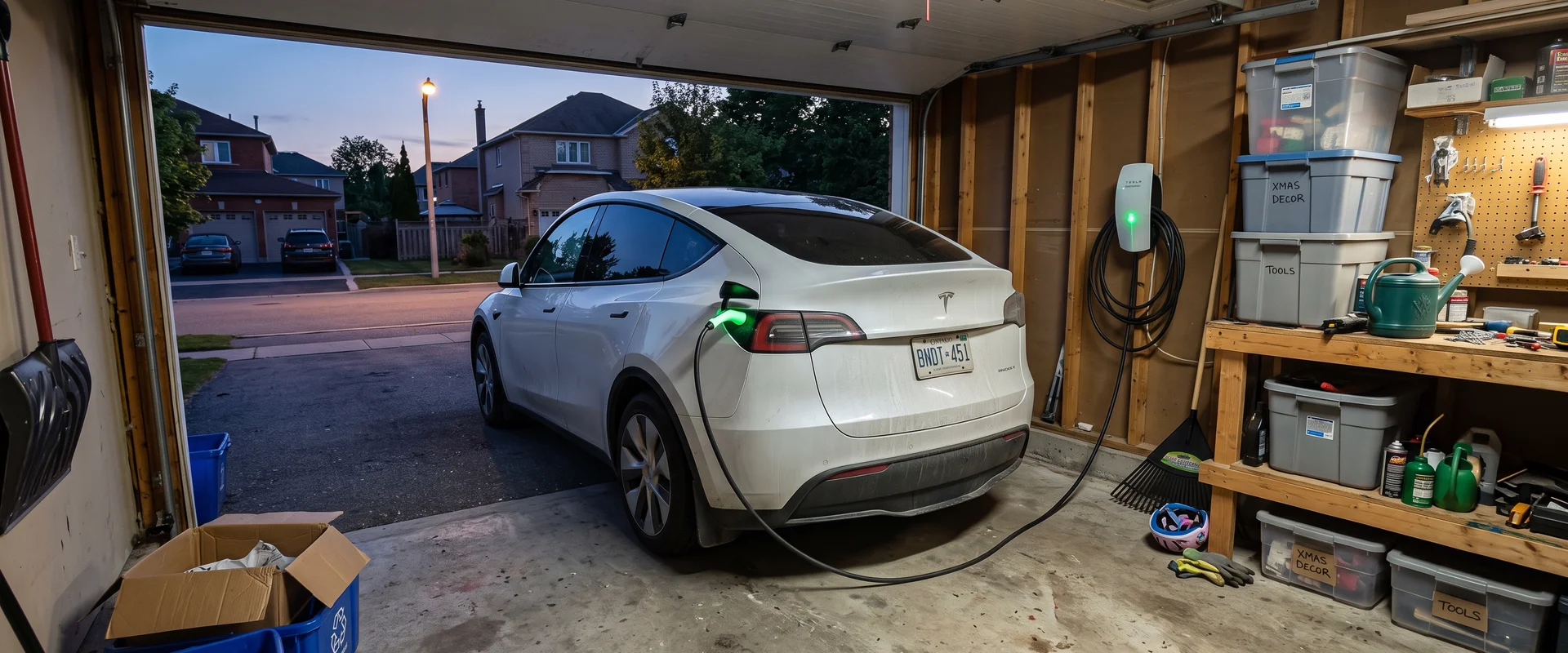
No ESA permit. The single most common failure. An unpermitted install has no Certificate of Acceptance, which means no proof the work met the Ontario Electrical Safety Code, which means no claim. This is also why an unpermitted “cash deal” install is rarely the bargain it looks like, and why every Tesla Wall Connector installation we do includes the permit as standard.
The charger is not ENERGY STAR certified. Certification is by model and sometimes by revision. A near-identical unit from the same brand can be listed while yours is not. Checking takes a minute before you order and cannot be fixed afterwards.
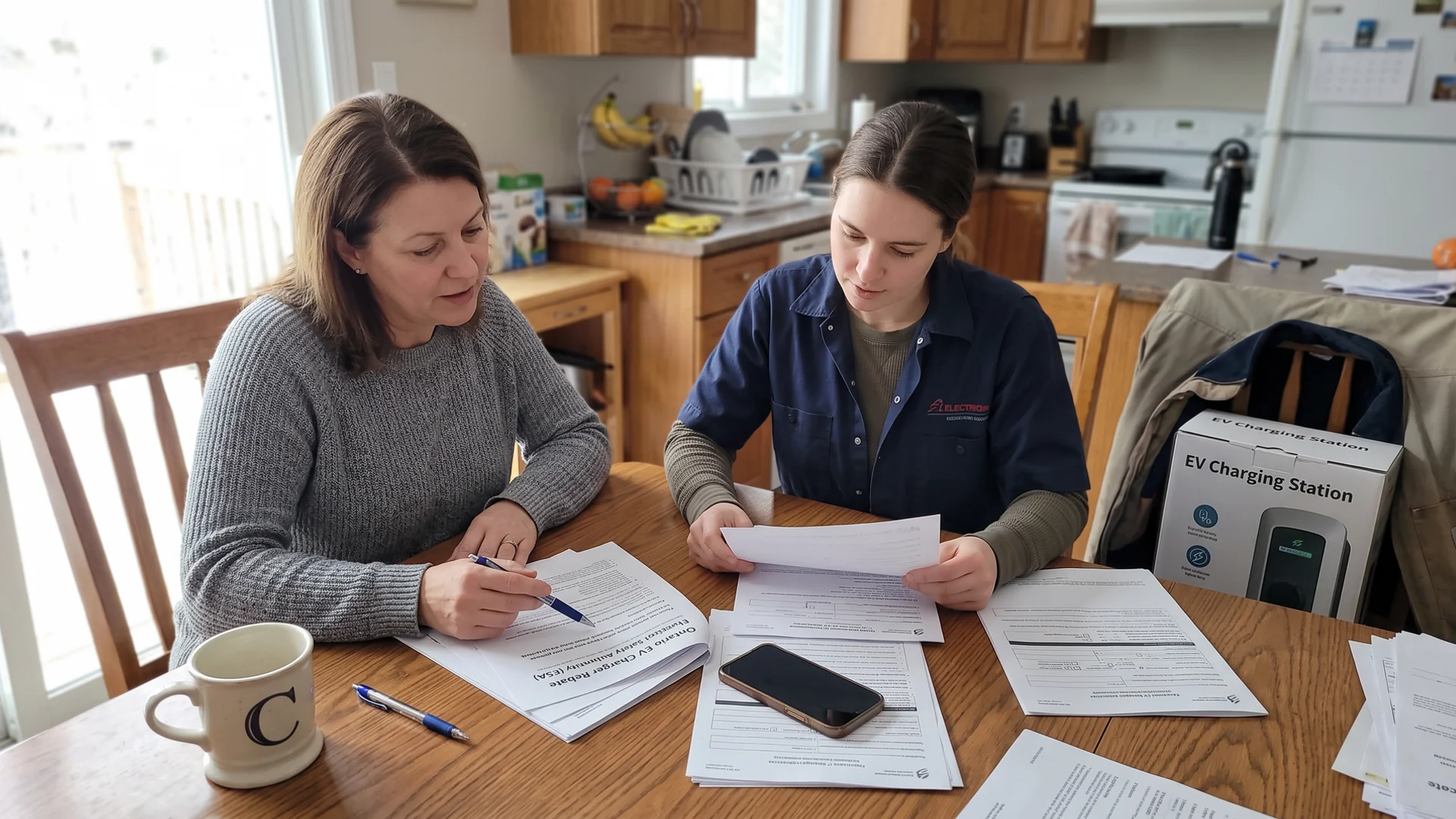
Incomplete documentation. The application wants the invoice, the permit number, proof of installation, and the equipment details in a specific form. Partial submissions sit in a queue until someone requests the missing piece.
Common problems we solve
- Unpermitted installs by others that block the claim until corrected.
- Wrong charger model bought before anyone checked the certification list.
- Stacking assumptions about Enbridge or Save on Energy that no longer hold this program year.
- iZEV confusion, where owners expect us to file a vehicle rebate the dealership handles.
- Missed Ultra-Low Overnight setup, which quietly costs more per kilowatt hour than it needs to.
What we file, and what we do not
We file the Home Renovation Savings application for your charger installation, assemble the documentation, and follow the claim through any information requests until it closes.
We review Enbridge EV Charger Rebate and Save on Energy eligibility for your address and program year, and file where you qualify. We advise on the Ultra-Low Overnight time-of-use rate, which for an overnight charger can substantially cut what each kilowatt hour costs you.
We do not file the federal iZEV rebate. That is a vehicle incentive applied by the dealership at the point of sale, and we coordinate around it rather than submitting it. We also do not guarantee approvals or timing. These programs are administered by others, funding is finite, and rules change between years. What we guarantee is that your paperwork will be complete, accurate, and submitted on time.
What does it cost?
Nothing, on any installation we complete. Rebate filing is part of the service, alongside the ESA permit and the manufacturer parts warranty registration.
For an install done by another contractor, standalone filing is $250 to $500 CAD. That covers verifying the charger’s ENERGY STAR status, confirming the permit and Certificate of Acceptance exist, preparing the application, and following it through. If the original install was never permitted, we will tell you before taking the fee, because the claim cannot proceed until that is corrected.
For most homeowners, the arithmetic is straightforward. A $1,500 to $2,800 CAD Level 2 install with up to $5,000 CAD available through Home Renovation Savings changes the shape of the decision entirely, provided the charger and permit boxes are ticked in the right order. Where the quote also includes an electrical panel upgrade, the rebate offsets a meaningful share of the combined cost.