What is a full 200A service upgrade?
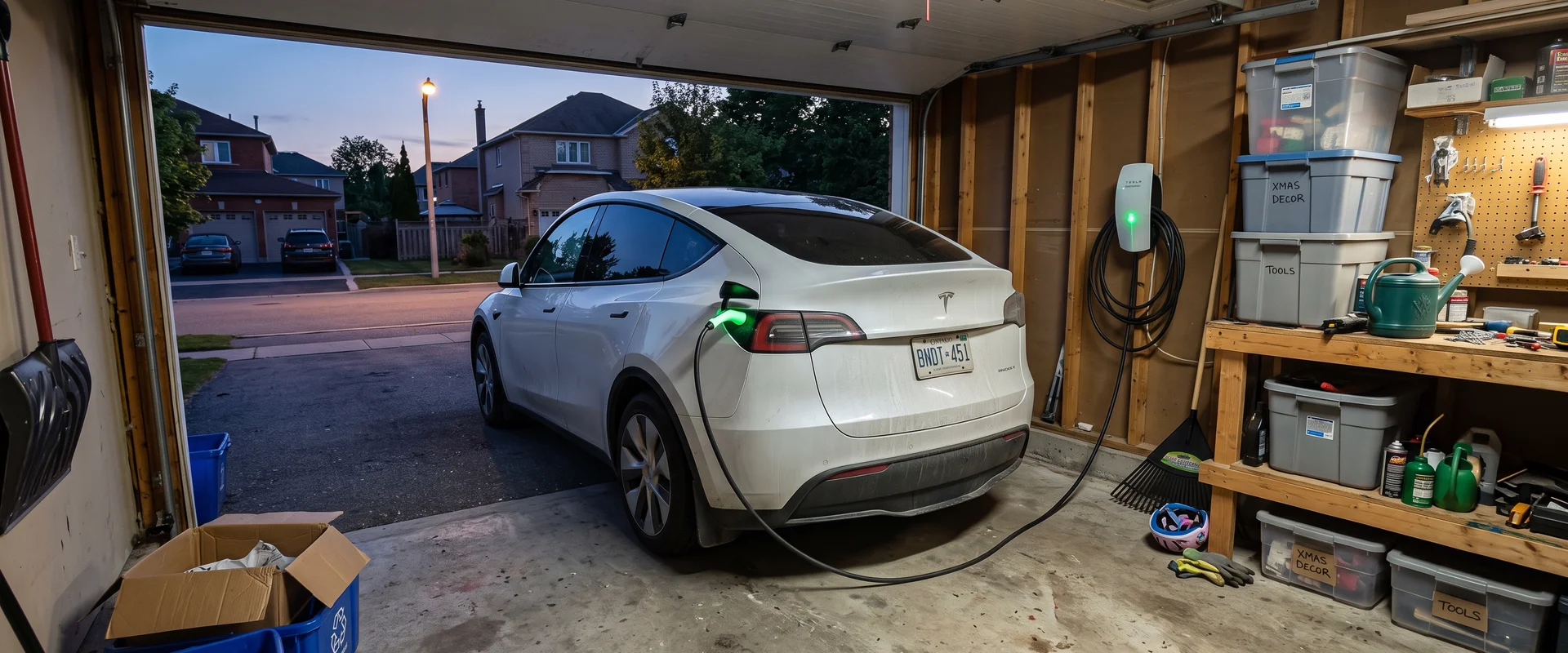
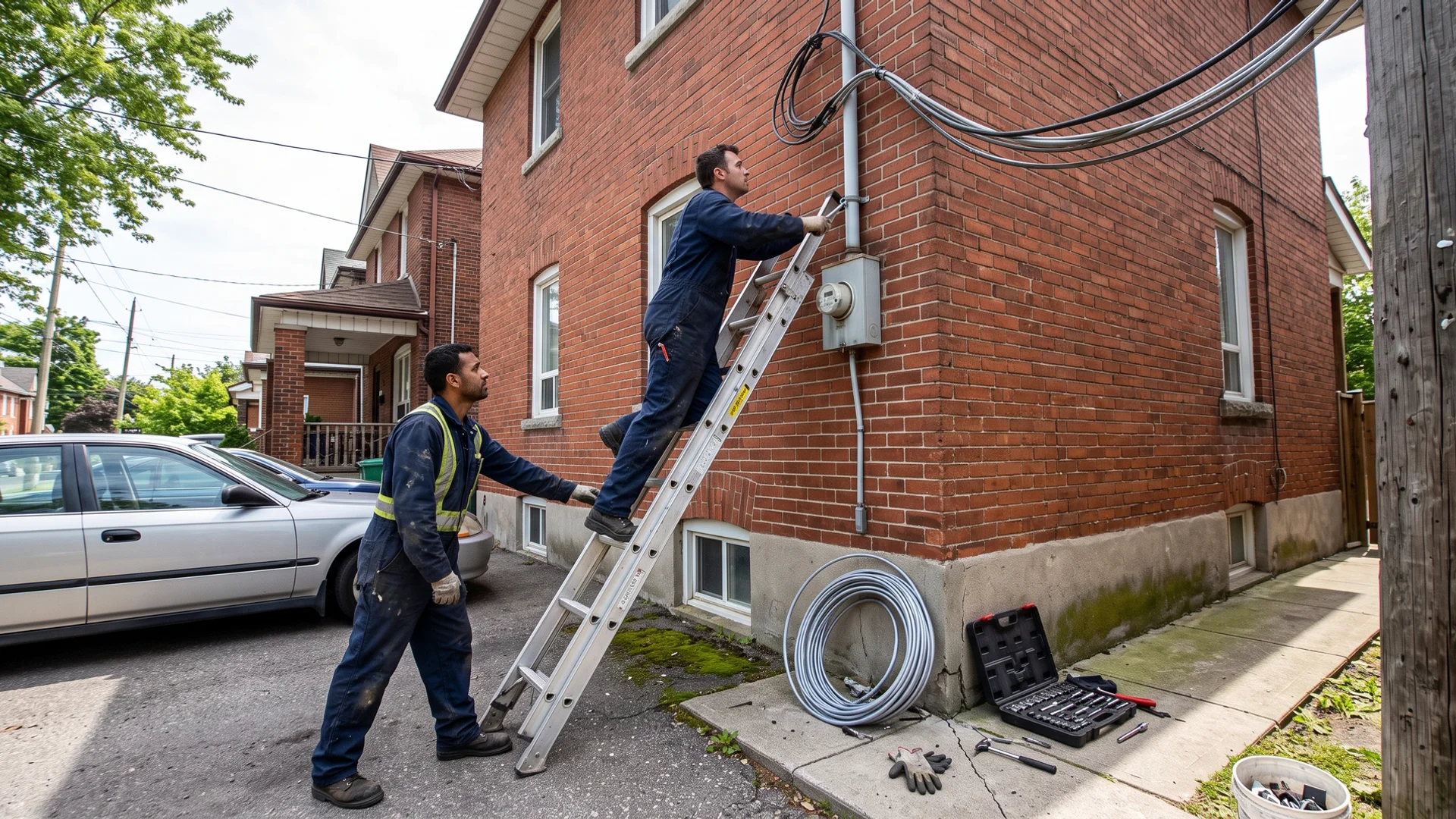
When a panel swap alone will not do it, a full service upgrade replaces the service mast, meter base, and coordinates the utility disconnect and reconnect with Toronto Hydro. Our crew handles the point-of-attachment work, ground plate, and OESC-compliant scope end to end, files the ESA permit, and schedules the inspection so your 200A service is ready for EV charging and future loads.
The distinction matters for your budget. An electrical panel upgrade deals with everything behind the meter. A service upgrade deals with the incoming supply itself: the weatherhead where the utility drop lands, the mast holding it, the meter base, the service conductors, and the grounding electrode system. If any of those are undersized or deteriorated, replacing only the panel leaves the actual bottleneck in place.
Most homes that need this are pre-1980 builds on 60A or 100A overhead service, and the mast and meter base are usually the same age as the house.
When do you actually need one?
Three signals point to a full service upgrade rather than a panel swap.
Your service is 60A or 100A and your load calculation says the upgrade is real. Not just “the panel looks full,” but an OESC Section 8 calculation showing the connected demand exceeds what the service can carry.
The mast, weatherhead, or meter base is deteriorated. Corrosion, a loose point of attachment, a cracked meter socket, or a mast pulling away from the wall. None of that gets better, and the utility will flag it eventually anyway.
You are adding more than a car. A heat pump, a second EV, a basement suite, an induction range, or a hot tub. Doing the service once with spare panel capacity is much cheaper than doing it twice.
If none of those apply and you just need headroom for one charger, say so, and we will price an EV load management device or a dedicated subpanel instead.
Common problems we solve
- Corroded or undersized service masts on older Etobicoke, East York, and Toronto core homes.
- Failing meter bases the utility has already tagged or flagged.
- Inadequate grounding. Common in pre-1970 homes and corrected as part of the upgrade.
- 60A services that cannot support modern living, let alone a 48A continuous charger load.
- Heritage and restricted-access properties where the mast route and point of attachment need planning rather than improvisation.
How does the utility coordination work?
This is the part homeowners dread, and it is entirely our job. We file the ESA permit and submit the service upgrade application to the utility that serves you: Toronto Hydro in the City of Toronto, Alectra Utilities across Mississauga, Brampton, Vaughan, Markham, and Aurora, Elexicon Energy through Durham and parts of York, and the local distributor in Oakville, Burlington, Milton, or Newmarket.
The utility schedules a disconnect so we can work the mast and meter base safely, then reconnects once the ESA inspection is satisfied. That scheduling is what makes a service upgrade a 1 to 2 week job rather than a same-day one, and it is the single biggest variable in the timeline.
On upgrade day the old mast and meter base come off, the new ones go up with a proper point of attachment, service conductors are pulled, a copper ground plate and bonding conductors are installed, and the new 200A panel goes in with labelled circuits. Power is back the same day in nearly every case.
What does it cost across the GTA?
A full 200A overhead service upgrade runs $3,500 to $5,500 CAD, including the mast, weatherhead, meter base, conductors, grounding, panel, ESA permit, and inspection. Bundled with the Level 2 charger install, most homes land between $5,000 and $7,300 CAD.
Underground service laterals cost more because of trenching and conduit. Heritage properties, tight side yards, and restricted-access sites are quoted after inspection rather than off a price list, because the routing genuinely changes the labour.
A whole-home surge protector is worth adding while the panel is open, both for the charger electronics and for everything else modern in the house. We quote it as its own line so you can decide. And the 2026 Home Renovation Savings program pays up to $5,000 CAD toward an eligible EV charger installation, which we file for you.